The Case for Action

Houston's
Challenge

The fourth-largest city in America faces flooding, extreme heat, declining biodiversity, and thousands of acres of idle land. The opportunity to act โ€” and lead โ€” has never been greater.

14ยฐF
Urban heat island
temperature increase
41%
Residents lacking
adequate tree cover
5,000+
Acres of vacant or
underused city land
20+
Days per year exceeding
EPA ozone standards
๐Ÿ“˜

Houston Miyawaki Urban Forest Planning Guide ยท v0.8 โ€” March 2026

Species selection ยท Soil prep ยท Site catalogs ยท Implementation roadmaps

Request the Guide โ†’
14ยฐF

Challenge One

Extreme Urban Heat
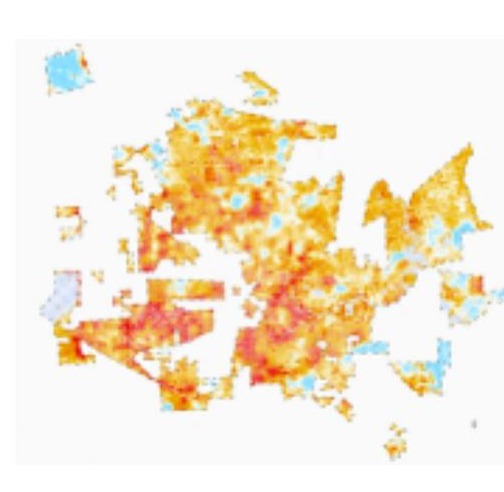
Houston's concrete amplifies the heat island effect.

Houston experiences some of the nation's most extreme heat waves. Its extensive pavement, concrete, and dark rooftops absorb and re-radiate solar energy โ€” raising local temperatures by as much as 14ยฐF in certain neighborhoods compared to rural surroundings.

Combined with high ozone levels, this heat intensification contributes to respiratory illness, heat stroke, and heat-related deaths โ€” with the burden falling hardest on lower-income communities with less tree cover and fewer cooling resources.

Tree cover follows income.

Houston's canopy equity gap is stark: low-income neighborhoods have 20% less tree cover than affluent areas. The neighborhoods that need cooling the most have the fewest trees. This is not a coincidence โ€” it reflects decades of disinvestment in green infrastructure in frontline communities.

The Miyawaki Solution

5โ€“8ยฐF temperature reduction within 3 years.

Dense Miyawaki canopy measurably reduces surrounding temperatures through evapotranspiration and shade. A 1,000 sq ft forest creates a cooling microclimate that benefits the surrounding block โ€” deployable on any vacant lot or retention pond margin.
80%

Challenge Two

Flooding & Stormwater

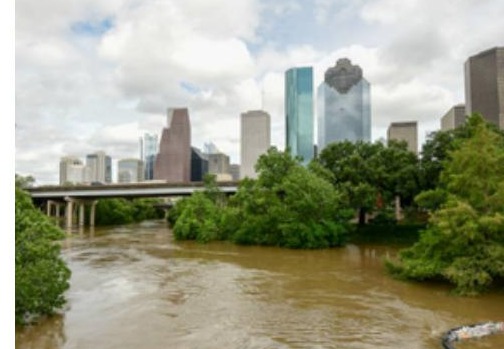
Houston's geography makes it flood-prone.

Houston's flat coastal geography, clay-heavy soils, and intense rainfall events create chronic flooding risk. The city has invested billions in engineered flood control โ€” concrete channels, detention basins, and drainage infrastructure โ€” with limited success.

Retention ponds and ditches are scattered across neighborhoods, but most are barren, grass-covered depressions. They hold water but provide virtually no ecological benefit. The grass roots do almost nothing to slow runoff or filter pollutants.

Every hurricane season reveals the gap.

Hurricanes Harvey, Imelda, and Nicholas exposed just how vulnerable Houston's flood management model is when rainfall exceeds infrastructure capacity. Nature-based solutions โ€” designed to absorb, slow, and filter water at the source โ€” offer a complementary and cost-effective resilience layer.

The Miyawaki Solution

80โ€“90% stormwater runoff reduction.

Vegetated, tree-filled landscapes absorb far more rainwater than bare grass โ€” through canopy interception, root-zone infiltration, and organic matter water-holding. A 1,000 sq ft Miyawaki forest can capture 8,000+ gallons per rainfall event, directly reducing downstream flood volume.

75%

Challenge Three

Native Biodiversity Loss

Development has replaced native ecosystems.

Houston's rapid urbanization has replaced coastal prairie, bottomland hardwood forest, and pine savanna with impervious surfaces, monoculture lawns, and invasive ornamental plants. The native ecosystems that supported thousands of species have been fragmented into isolated patches.

Invasive species โ€” Chinaberry, Chinese Tallow, Ligustrum โ€” aggressively colonize disturbed urban land, outcompeting natives and providing little ecological value to local wildlife. These plants are common across Houston's vacant lots and roadsides.

Pollinators, birds, and wildlife are struggling.

The decline of native plants cascades through the food web. Without native host plants, butterfly and moth populations collapse. Without insects, bird populations decline. Houston sits on the Central Flyway โ€” one of the most important migratory bird corridors in North America โ€” but has fewer and fewer native trees to support migrating species.

The Miyawaki Solution

75% higher native biodiversity within 3 years.

Miyawaki forests prioritize native species โ€” suppressing invasives through dense planting competition and restoring critical habitat. By Year 3, expect 50+ bird species, 20+ native insect groups, and small mammals. Each forest becomes a stepping stone in Houston's urban wildlife network.

$M

Challenge Four

Idle Land & Missed Value

Houston is mowing its way to nowhere.

Over 5,000 acres of vacant lots, roadside verges, unused retention ponds, and decommissioned industrial sites sit idle across Greater Houston. The city and county spend millions annually mowing and maintaining these spaces โ€” receiving nothing in return: no ecological benefit, no cooling, no carbon storage, no community value.

This idle land is scattered across every neighborhood type โ€” from affluent suburbs to low-income urban cores. Much of it is publicly owned and could be transformed without significant land acquisition costs.

The fiscal opportunity is real.

Urban forests have been shown to reduce city maintenance costs significantly while boosting adjacent property values. A Miyawaki forest โ€” self-sustaining by Year 3 โ€” ultimately costs the city less than continued mowing while delivering compounding environmental returns for decades.

The Miyawaki Solution

Turn maintenance costs into ecological assets.

Federal and state funding streams โ€” EPA, FEMA, state forestry programs โ€” can cover 50โ€“90% of eligible project costs for qualifying sites. The economic case is strong: lower long-term maintenance, higher surrounding property values, and measurable stormwater savings that reduce infrastructure costs.

Know Your Ground

Houston soil types โ€” and our approach to each.

Houston's soils vary significantly across the metro area. Our Miyawaki designs account for each soil type with tailored species selection and amendment protocols.

Prairie & Coastal Clay

pH 5.5โ€“6.5 ยท High clay content ยท Poor drainage

Most common in inner-loop and southeast Houston. Amendment strategy: 1 part native soil + 1 part compost + sand for drainage improvement. Species selected for periodic saturation tolerance.

Sandy Loam (Inner Basin)

Acidic ยท Low nutrients ยท Drought susceptible

Found in the Piney Woods fringe and northeast Houston. Amendment: 1 part soil + 2 parts compost to build organic matter and water-holding capacity. Excellent drainage for many native species.

Alkaline Calcareous Soils

pH 7.5โ€“8.0 ยท Iron chlorosis risk

Common in West Houston toward the Hill Country transition. Requires chelated iron amendments and species tolerant of higher pH. Several of our catalog species are specifically adapted to these conditions.

Bayou Alluvial Deposits

Variable ยท Intermittent flooding required

Found along Buffalo Bayou, White Oak Bayou, and their tributaries. Excellent for native wetland-edge forests. Our Bayou Catalog (Catalog 1) is specifically designed for these conditions.

The Opportunity

Houston can lead the nation.

No other major U.S. city combines Houston's unique mix: the land availability, the climate, the flooding challenge, the equity gap, and the civic energy needed to pioneer urban reforestation at scale.

๐Ÿ›๏ธ

Government Partners

City of Houston, Harris County, and precinct leadership can unlock public land access, integrate forests into flood resilience strategies, and qualify for federal reforestation funding.

๐Ÿข

Corporate Sponsors

Houston's energy, petrochemical, and healthcare sectors have sustainability commitments to fulfill. Sponsoring a Miyawaki forest delivers measurable ESG impact and community goodwill.

๐Ÿซ

Universities & Schools

UH, Rice, HCC, and Houston ISD can host demonstration forests โ€” turning schoolyards into living classrooms and research sites that generate longitudinal ecological data.

Implementation Roadmap

Five steps to Houston's urban forest network.

1

Map Opportunities

Identify underutilized city land, vacant lots, and retention ponds across Houston neighborhoods.

2

Build Partnerships

Engage government, nonprofits, foundations, corporations, and community groups.

3

Launch Pilots

Begin with 10 pilot forests across diverse site types โ€” bayou, schoolyard, parking lot, and roadside.

4

Mobilize Volunteers

Tap into Texas-wide campaigns and community groups for planting days and ongoing stewardship.

5

Monitor & Scale

Document growth, biodiversity, and carbon data โ€” then use it to scale to hundreds of sites.

"Houston can lead the nation by transforming wasted land into living infrastructure."
โ€” Urban Green Initiative Whitepaper, 2025
Join the Effort โ†’